By Christine Koh, Senior Physiotherapist at City Osteopathy & Physiotherapy, based at The Moving Body East Coast
Before I trained in Pilates, I treated bodies the way most physiotherapists are taught to: find the injured area, look one joint above it, look one joint below it, and build a plan around that. It’s a logical approach, and it works — up to a point.
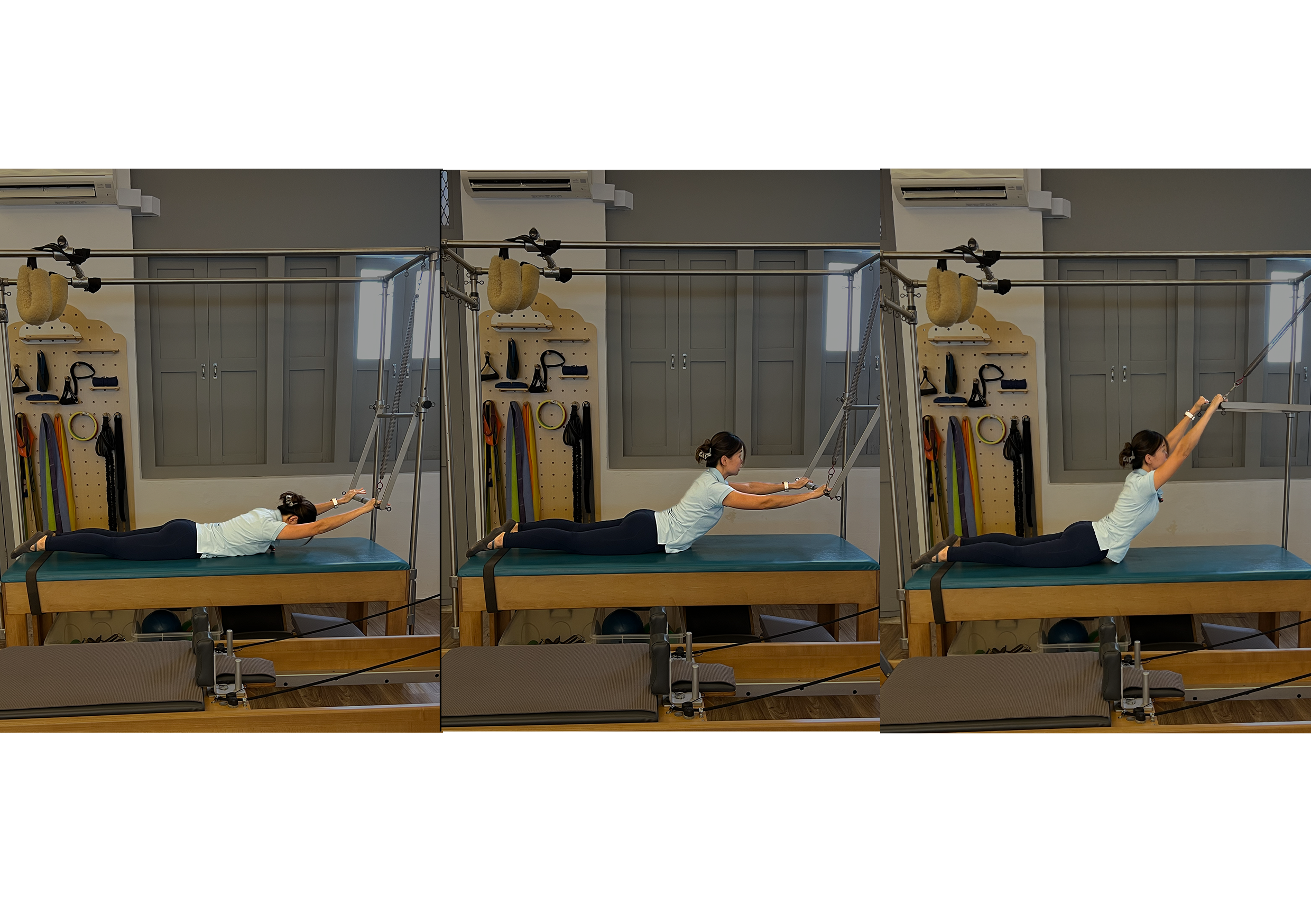
What changed my thinking was watching how well people moved after working with Pilates instructors. I started training myself, and once I became a certified Pilates practitioner for rehabilitation, I stopped looking at bodies in parts. I started looking at the body as a whole continuum.
From the injured area to the whole body
Now, when someone comes to see me — even if their complaint is very specific, say, a sore knee — I won’t just look at the knee. I’ll ask them to touch their toes. I’ll ask them to squat. I’ll ask them to balance on one leg and do a single heel raise. None of those movements are specific to the injury site, but each one tells me something: whether they’re lacking balance, lacking range of motion, or lacking strength somewhere else in the chain.
That global view catches things a narrower approach misses. A stiff upper back, for example, can force the lower back to move more than it should, creating extra shear forces through the lower spine — and eventually, lower back pain. So from day one, a patient might leave with an upper back stretch as part of their plan, even though their pain is in their lower back. It’s not simply treating the symptom. It’s addressing the pattern that’s likely to keep causing it.
The core isn’t a switch — it’s a dial
One thing I wish more people understood about the core is that it isn’t something you simply “switch on.” It’s not the abdominals alone, and it’s not an on-or-off setting. The core is how force transmits through the body — from the arms through the legs, or the legs through the arms — and it works more like a volume dial. A slow, controlled movement calls for a lower, steadier level of core engagement. A bigger, faster movement calls for more. Training it as a dial rather than a switch is a big part of what separates Pilates from simply “doing crunches.” Pilates training improves core control.
Alignment is the part people underestimate
Good posture, to me, isn’t really about how you look standing still. It comes down to something more technical: whether you’re holding a neutral spine, with your pelvis and limbs organised so your muscles are balanced front to back, top to bottom. When that alignment is off — say, the pelvis is tucked under into a posterior tilt — you actually compress your lower back and your organs, and put more load through the lumbar spine than necessary.
Get that alignment right, and the benefits go well beyond looking better. You get better weight distribution, better coordination between the front and back of your body, less strain overall — and, in my experience, more energy. Even people who are already strong from years of gym training can still move inefficiently if their body alignment isn’t organised well.
Why you can feel different after a session without feeling wrecked
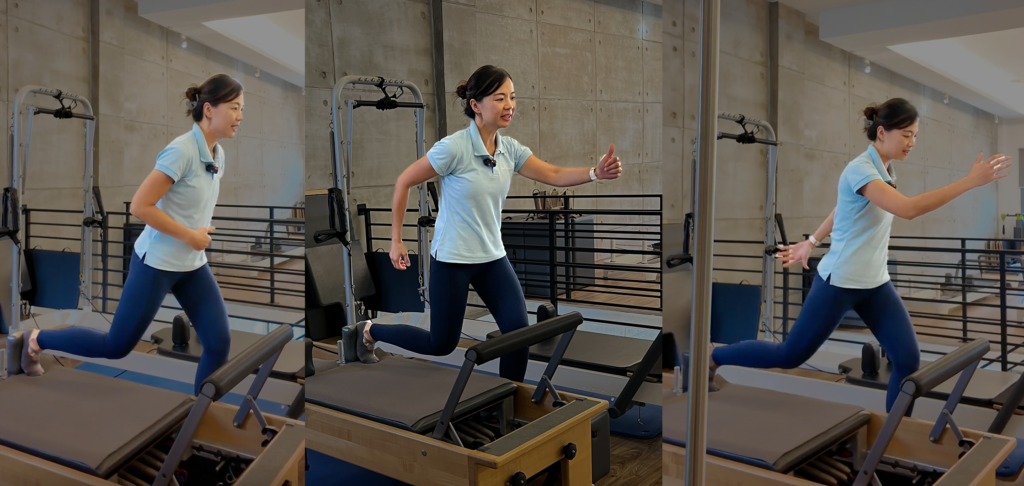
People sometimes tell me Pilates doesn’t feel like a “real workout” because they’re not sore or exhausted afterwards. That’s actually intentional, at least in how I structure a session. I want a client to leave our session and be able to carry on with their day — not needing to recover from it. The goal isn’t to fatigue a muscle group the way a strength session would; it’s to wake up coordination and control. If I were doing strength training with a patient, I’d expect them to leave sore. In a Pilates session, the goal is different — better coordination, better balance — so people often leave feeling more energetic, not less.
Over months of consistent practice, I notice real changes in how people carry themselves. They come in with a lighter step and a better mood. Their friends start commenting on their posture. Some tell me their sleep has improved, which I think comes from how much reorganisation the body has gone through and the better rest that follows.
It shows up in performance too
This isn’t only about pain relief. I once worked with a young athlete — a tennis player — who came in with a neck condition. Part of his programme included a sidelying hip movement, aimed at helping him understand where his head sits in relation to his hips. After his next match, he came back and told me his neck felt better — but so had his tennis serve. It got more powerful, without him feeling like he’d worked any harder. That’s often how it goes: improve how the body organises itself, and performance follows without extra effort.
I see something similar in older clients. Beyond strength, they tend to stand more upright, breathe easier, and move with more confidence — which matters enormously for people who’ve become cautious after an injury and started taking smaller, more hesitant steps. I remembered a client, in his sixties, who came back from his annual check-up and told me — half jokingly — that he’d actually gotten an inch taller after a year of consistent practice. That’s what improved posture can do for you!
It’s not just for people who are already fit
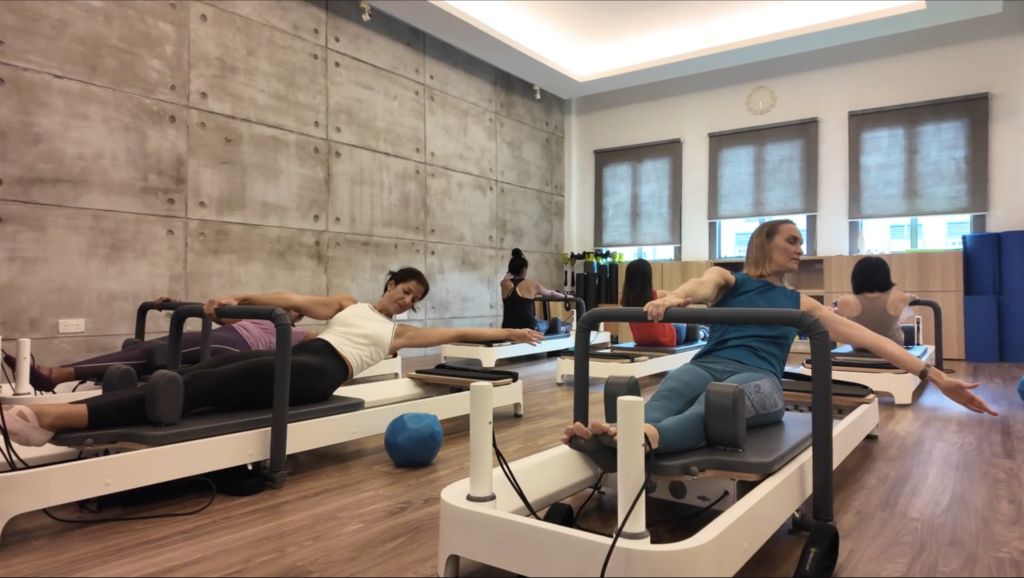
A common misconception is that Pilates is only for people who are already flexible or in good shape. In my clinical work, it’s often the opposite. I get patients moving on Pilates equipment from day one, even while they’re still in pain, because there are almost always ways to modify a movement so someone can do it safely and pain-free. Watching that moment when a client realises they can move despite their injury, and their whole face lights up — that’s one of my favourite parts of this work.
Why I still call it more than exercise
If I had to describe what Pilates actually trains, it isn’t muscle size or raw output. It’s alignment. It’s coordination. It’s the ability to organise your body well enough that movement — any movement, whether that’s daily life, sport, or getting back on your feet after an injury — becomes more efficient, and as a result, more enjoyable.
This is why I don’t put Pilates in the same category as the gym, or a run, or a yoga class. Those are all things you do – and I believe that all and any movement is important. However Pilates, to me, sits underneath all of that — it’s not a form of exercise so much as what teaches your body how to move well in the first place. Get that right, and everything else follows without you trying quite so hard for it: the tennis serve that suddenly has more power, the stairs that don’t wind you, the confidence to step out of the house again after an injury.
That’s the part I wish people understood before they ever try a class. It was never really about the hour on the reformer. It’s about the rest of your day.