
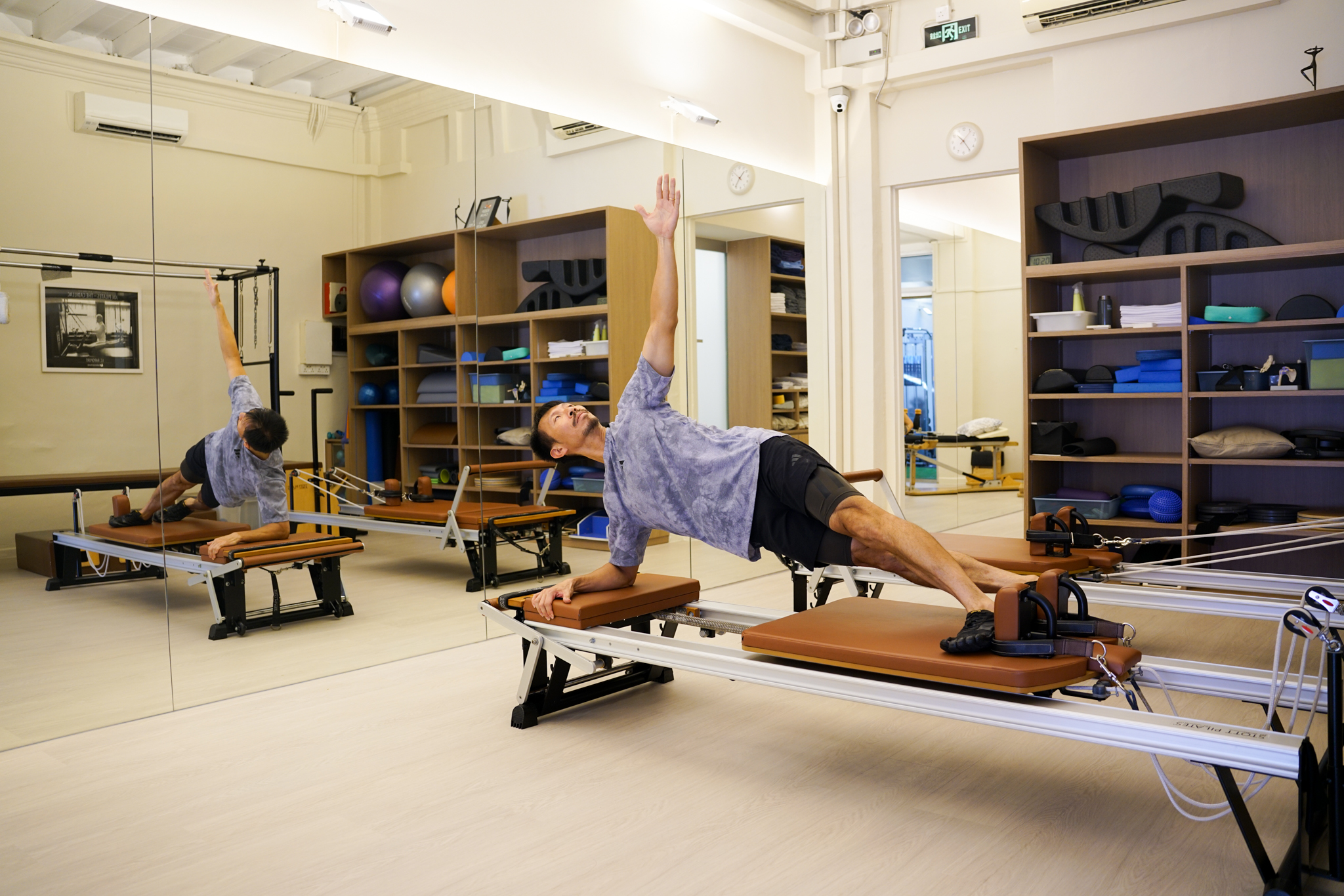
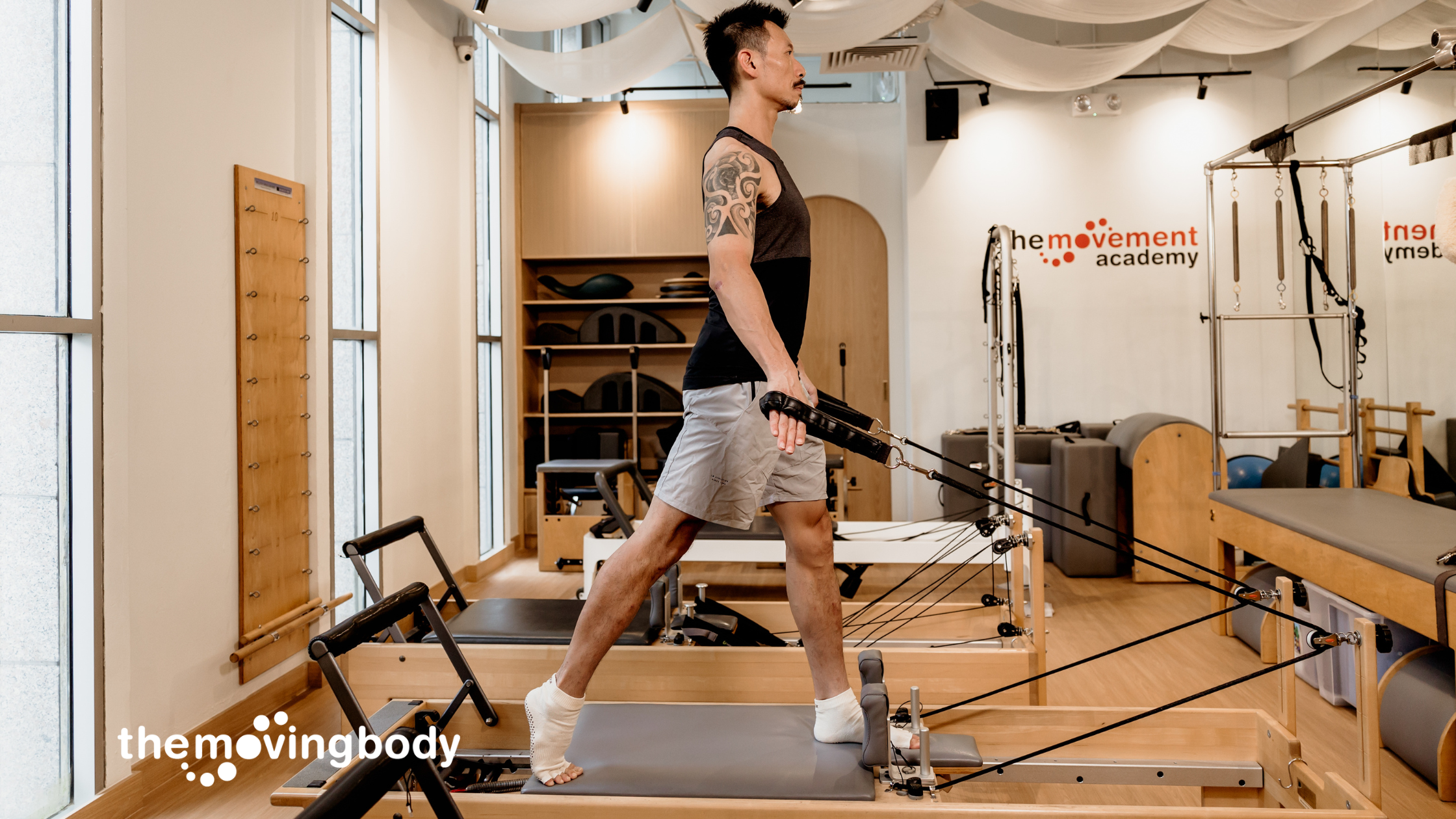
 Kelvin doing a standing advanced exercise on the reformer
By Master Instructor Kelvin Tan from The Moving Body East Coast
“People often ask me whether Pilates counts as strength training. My answer is simple: yes—but whether it’s enough depends on what you’re training for.” — Kelvin, Master Instructor, The Moving Body
If you’ve ever wondered whether Pilates can replace lifting weights, you’re not alone. It’s one of the most common questions we hear at The Moving Body.
The confusion comes from how we talk about exercise today. We have Pilates, gyms, yoga, functional training, HYROX, CrossFit and countless fitness trends—all claiming to build strength.
The truth is surprisingly simple – strength training isn’t defined by the equipment you use. It’s defined by whether your body becomes stronger.
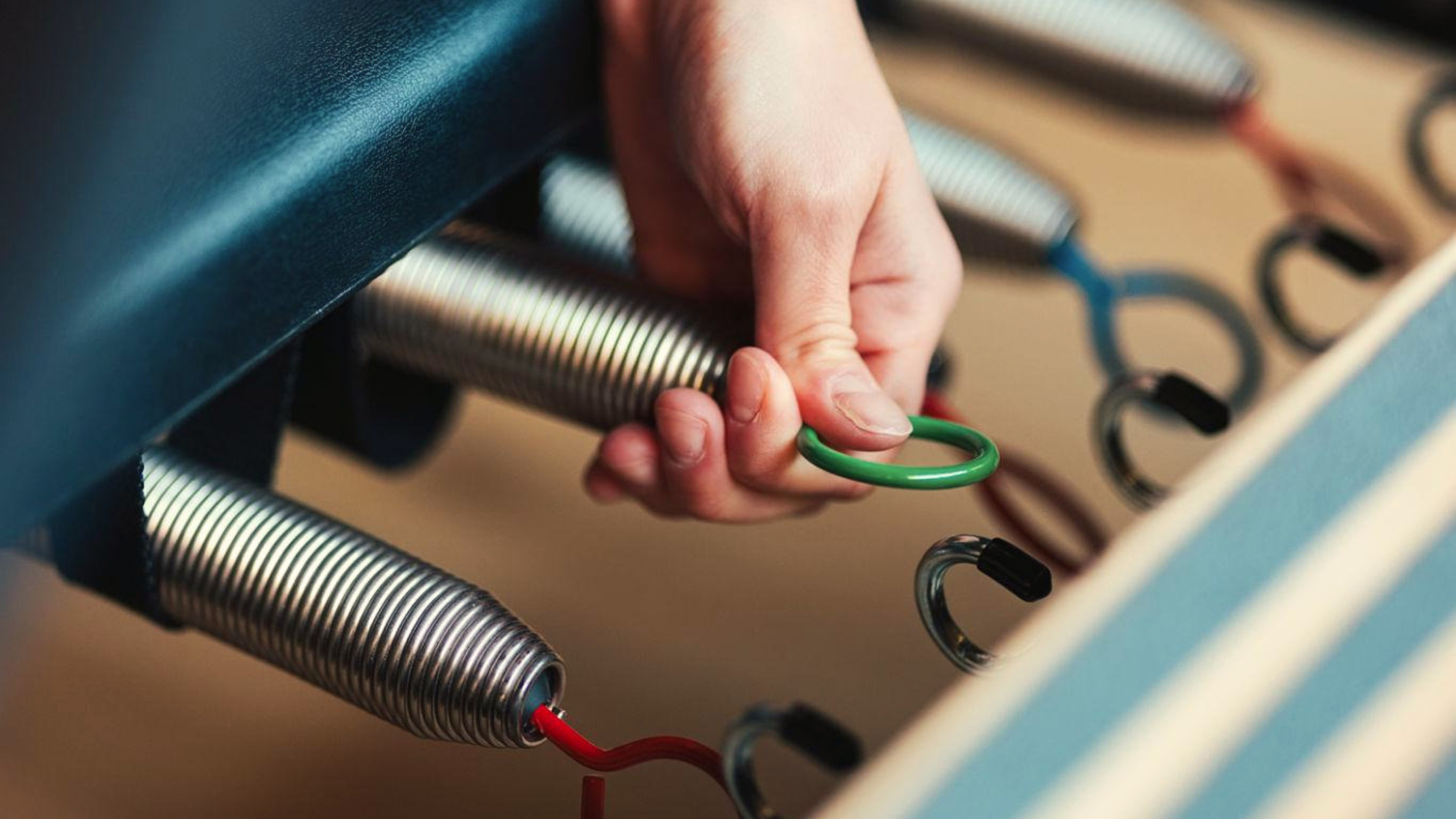
Changing resistance springs on a reformer
Is Pilates strength training?
Yes. Pilates is a form of strength training.
Strength training simply means challenging your muscles so they become stronger over time. For someone who is new to exercise or has been largely sedentary, Pilates can significantly improve strength, balance and control.
However, whether Pilates alone is enough depends on your goals.
If your goal is to move better, reduce aches and pains, improve posture and stay active throughout life, Pilates may provide all the strength you need.
If your goal is to carry much heavier loads, compete in events like HYROX, or maximise muscle size and maximal strength, progressively adding external resistance becomes increasingly important.
Why is everyone talking about strength training?
One reason is ageing.
From around our thirties onwards, we naturally begin losing muscle mass and strength—a process known as sarcopenia. Left unchecked, this contributes to reduced mobility, poorer balance and an increased risk of falls later in life. Fortunately, resistance training is one of the most effective ways to slow this decline and improve strength at almost any age. (OUP Academic)
That’s why strength training has become such an important conversation—not just for athletes, but for anyone who wants to age well.
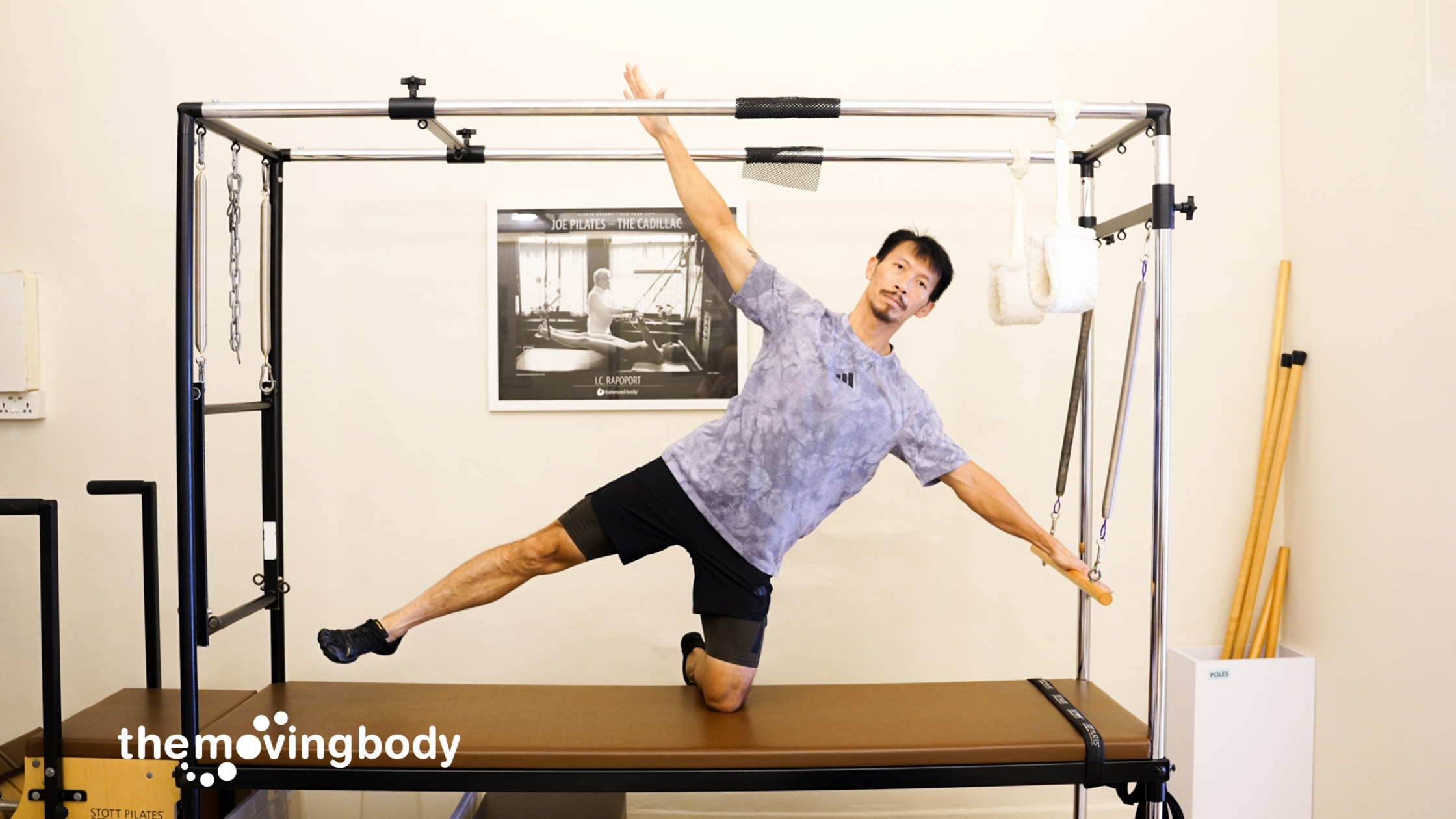 Kelvin building lateral strength and stability with the Kneeling Side Bend on the Cadillac.
Pilates vs gym training: software vs hardware
One analogy I like to use is thinking of your body like a computer.
Your muscles are the hardware.
Your movement patterns are the software.
Traditional strength training is excellent for upgrading the hardware. It increases your ability to produce force by progressively overloading your muscles.
Pilates upgrades the software.
It teaches your body how to coordinate movement, improve alignment, activate stabilising muscles and move efficiently through different planes of motion.
You can have incredibly powerful hardware, but if the software isn’t working well, you won’t use that strength effectively.
The best-performing body has both.
Can someone become too strong for Pilates?
In some cases, yes.
Someone who has developed exceptional strength through advanced calisthenics or heavy strength training may eventually outgrow the amount of resistance a Pilates reformer can provide.
That doesn’t mean Pilates loses its value.
Instead, its role changes.
Rather than being the primary way to build strength, it becomes an excellent way to maintain movement quality, body awareness, coordination and control.
Why I would still choose Pilates
If I could only choose one form of exercise for the rest of my life, I would choose Pilates.
Not because strength isn’t important—it absolutely is.
But because my priorities have changed.
When we’re younger, many of us train like we’re trying to become a Ferrari. We chase personal bests, heavier lifts and bigger numbers.
As I get older, I don’t want my body to be a Ferrari anymore.
I want it to be a Toyota.
Reliable.
Efficient.
Able to keep going for decades.
For me, fitness is no longer about reaching the highest level of performance. It’s about continuing to move well for the rest of my life.
Pilates helps me build that foundation.
 A happy senior couple holding hands walking with hiking sticks
Should you do Pilates or strength training?
The answer isn’t either-or.
They complement each other.
Pilates develops movement quality, balance, alignment and body awareness.
Strength training progressively overloads your muscles so they become stronger.
Think of Pilates as learning to move well.
Think of strength training as increasing how much load your body can safely handle.
When combined, they help you move with greater confidence—whether you’re carrying shopping bags, hiking on holiday, playing with your grandchildren or simply getting through everyday life with less effort.
The bottom line
The question isn’t whether Pilates builds strength.
It does.
The better question is:
Is it enough strength for the life you want to live?
For many people, Pilates provides exactly what they need to stay strong, mobile and independent.
For others, adding progressive strength training helps them reach the next stage of their fitness journey.
The goal isn’t simply to become stronger.
The goal is to keep moving well—for life.